
Atari 800

Donkey Kong
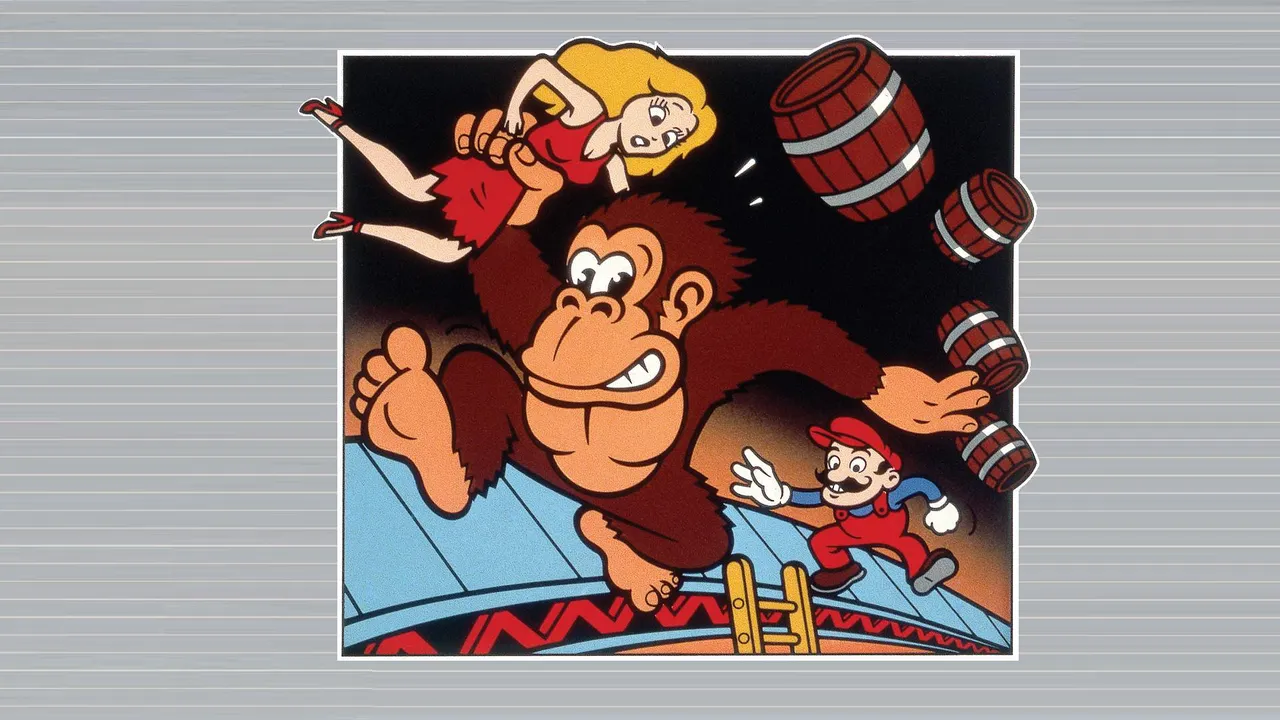
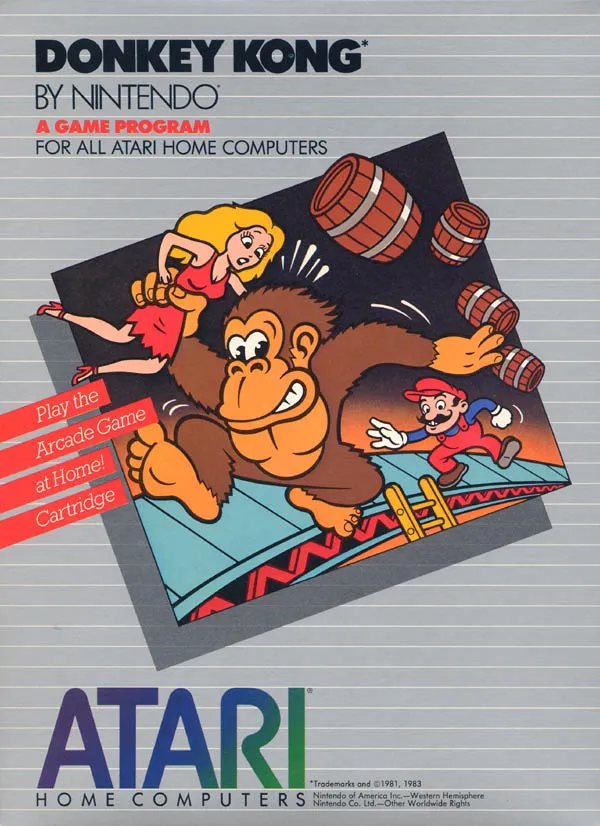
The game is divided into four different single-screen stages. Each represents 25 meters of the structure Donkey Kong has climbed, one stage being 25 meters higher than the previous. The final stage occurs at 100 meters. Stage one involves Mario scaling a construction site made of crooked girders and ladders while jumping over or hammering barrels and oil drums tossed by Donkey Kong. Stage two involves climbing a five-story structure of conveyor belts, each of which transport cement pans. The third stage involves the player riding elevators while avoiding bouncing springs. The final stage involves Mario removing eight rivets which support Donkey Kong. Removing the final rivet causes Donkey Kong to fall and the hero to be reunited with Pauline. These four stages combine to form a level. Upon completion of the fourth stage, the level then increments, and the game repeats the stages with progressive difficulty. For example, Donkey Kong begins to hurl barrels faster and sometimes diagonally, and fireballs get speedier. The victory music alternates between levels 1 and 2. The 22nd level is colloquially known as the kill screen, due to an error in the game's programming that kills Mario after a few seconds, effectively ending the game.
- Release date
- December 31, 1982
- Developer
- Atari
- Publisher
- Atari
- Players
- 1
About this game
Donkey Kong
The game is divided into four different single-screen stages. Each represents 25 meters of the structure Donkey Kong has climbed, one stage being 25 meters higher than the previous. The final stage occurs at 100 meters. Stage one involves Mario scaling a construction site made of crooked girders and ladders while jumping over or hammering barrels and oil drums tossed by Donkey Kong. Stage two involves climbing a five-story structure of conveyor belts, each of which transport cement pans. The third stage involves the player riding elevators while avoiding bouncing springs. The final stage involves Mario removing eight rivets which support Donkey Kong. Removing the final rivet causes Donkey Kong to fall and the hero to be reunited with Pauline. These four stages combine to form a level.
Upon completion of the fourth stage, the level then increments, and the game repeats the stages with progressive difficulty. For example, Donkey Kong begins to hurl barrels faster and sometimes diagonally, and fireballs get speedier. The victory music alternates between levels 1 and 2. The 22nd level is colloquially known as the kill screen, due to an error in the game's programming that kills Mario after a few seconds, effectively ending the game.
Genres
Modes
Studios and credits
- Developer
- Atari
- Publisher
- Atari
Regional releases
Release date
Artwork gallery
6 images
Add artwork
Help this listing look its best.
Share missing box backs, screenshots, clear logos, cartridges, discs, and other useful art. Nothing appears publicly until an administrator reviews it.