
Nintendo Famicom
Kaijuu Monogatari
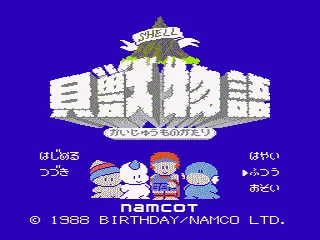
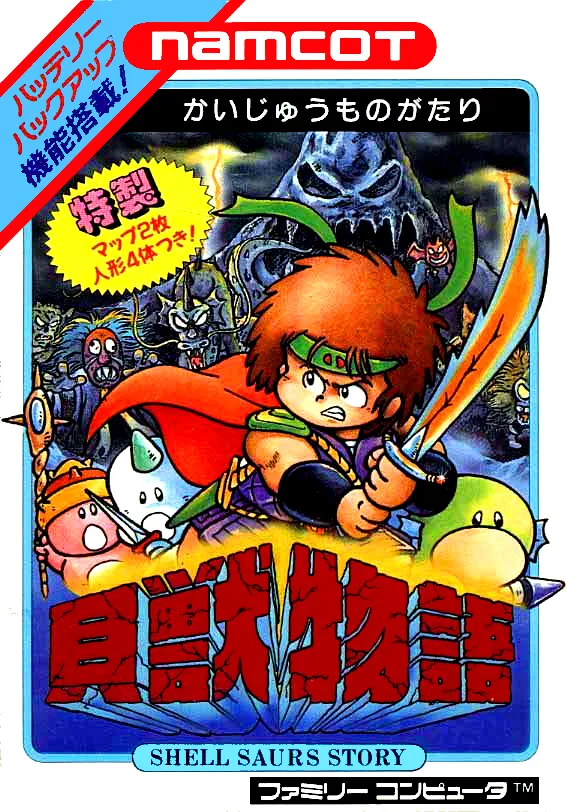
Kaijuu Monogatari is a role-playing video game developed by Birthday and published by Namco for Famicom, in November 1988 in Japan. This is Namco's first published "traditional" console RPG. It follows a very established formula; obtain a quest from a king, learn more from towns people, and fight enemies in the wilderness through turn-based combat to grow and become stronger. The gameplay and artwork of the game looks extremely similar to Dragon Warrior and clearly drew inspiration from it. Even the box art employs a similar style to Akira Toriyama, the character designer for much of the Dragon Warrior series. In this game, the player does not just control one character, but rather four characters independently, and choose to unify them into one large party, or split them off into individual parties as the player sees fit. The game also came with a large cloth map which represented the "known world". It did not represent every feature of the outside world, but gave a fairly accurate depiction of all the major and minor geographical features of the world.
- Data de lançamento
- November 18, 1988
- Desenvolvedor
- Birthday
- Editora
- Namco
- Jogadores
- 1
Sobre este jogo
Kaijuu Monogatari
Kaijuu Monogatari is a role-playing video game developed by Birthday and published by Namco for Famicom, in November 1988 in Japan.
This is Namco's first published "traditional" console RPG. It follows a very established formula; obtain a quest from a king, learn more from towns people, and fight enemies in the wilderness through turn-based combat to grow and become stronger. The gameplay and artwork of the game looks extremely similar to Dragon Warrior and clearly drew inspiration from it. Even the box art employs a similar style to Akira Toriyama, the character designer for much of the Dragon Warrior series.
In this game, the player does not just control one character, but rather four characters independently, and choose to unify them into one large party, or split them off into individual parties as the player sees fit. The game also came with a large cloth map which represented the "known world". It did not represent every feature of the outside world, but gave a fairly accurate depiction of all the major and minor geographical features of the world.
Gêneros
Modos
Estúdios e créditos
- Developer
- Birthday
- Publisher
- Namco
Lançamentos regionais
Data de lançamento
Galeria de arte
2 images
Adicionar arte
Help this listing look its best.
Share missing box backs, screenshots, clear logos, cartridges, discs, and other useful art. Nothing appears publicly until an administrator reviews it.